

Resources / Foundation Installation
Survey controlled helical pile installation & elevation verification.
Accurate pile installation starts with carrying the project location and elevation into the field and holding that control through installation.
Rueben Group combines survey-controlled layout, physical field references, and elevation verification to check installed piles against project-specific requirements.
Layout
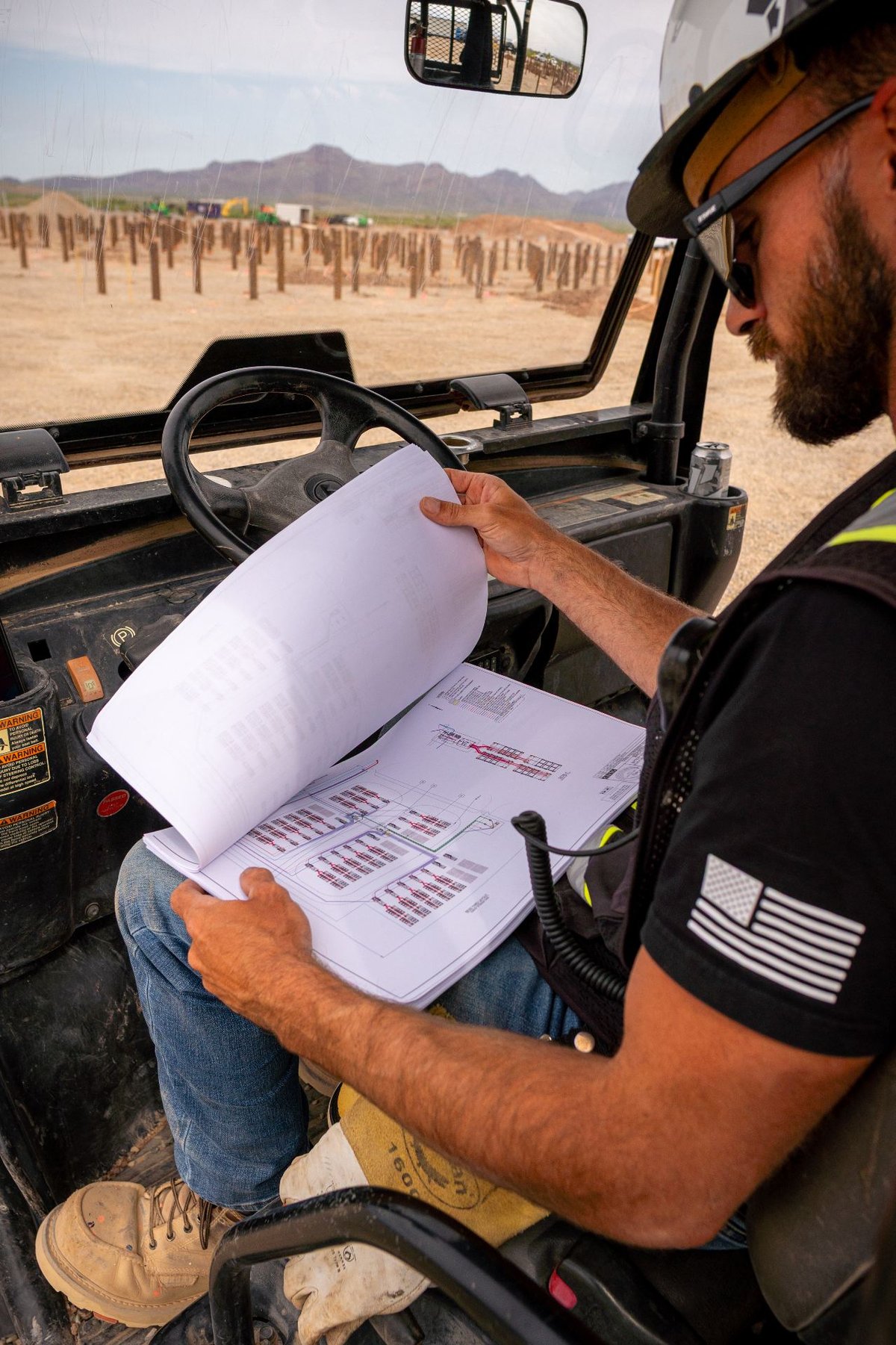
From design information to field control.
Before a helical pile can be installed, its required location has to move from the project information into a physical point on the site. Pile locations and elevations originate from the project design and survey information, and the applicable positional and elevation requirements are established by the engineer and the project specifications.
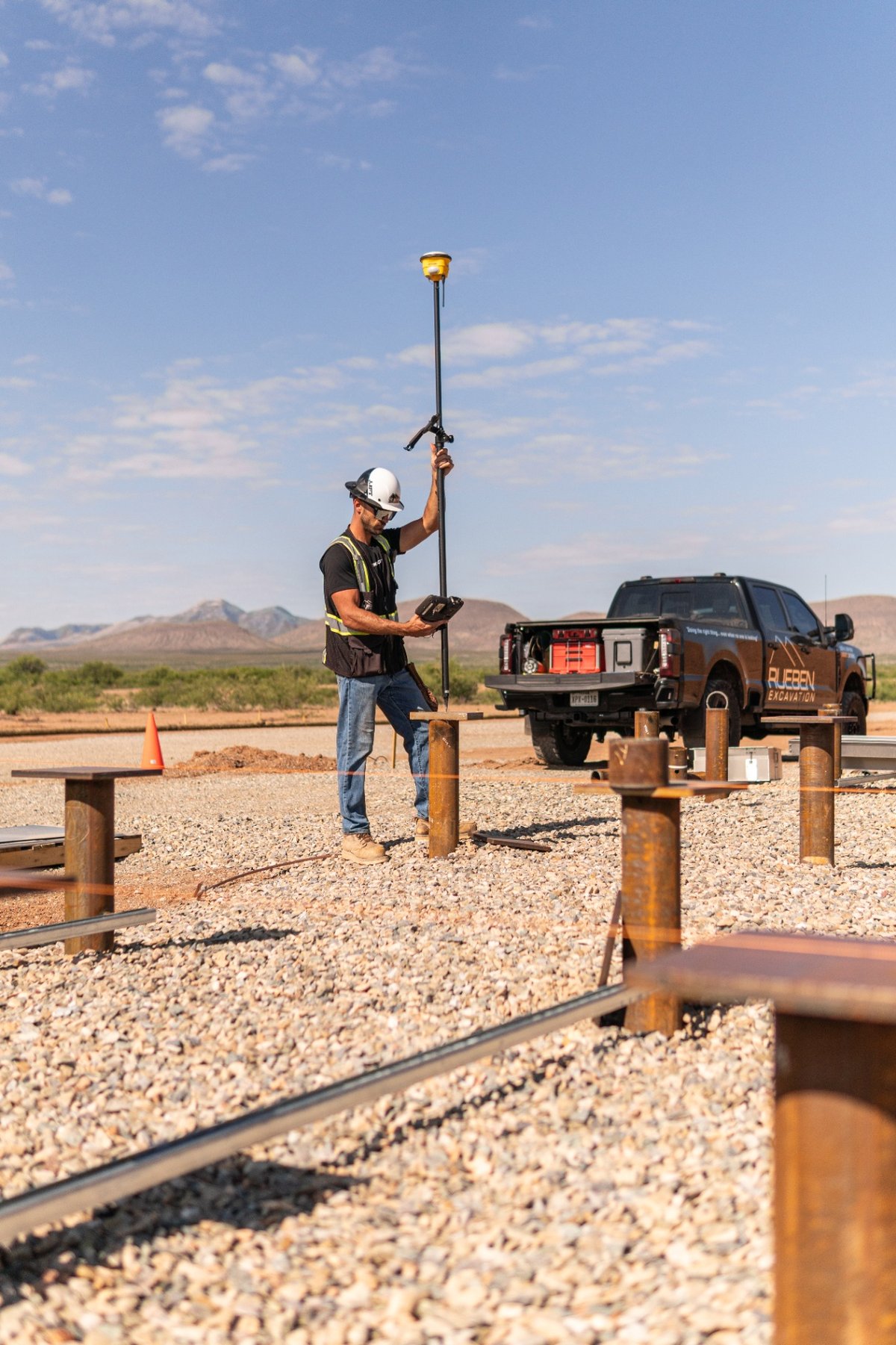
Rueben performs construction layout against those requirements using current Trimble survey equipment, including GNSS base and rover equipment. Pile locations are identified individually so field work can be tracked pile by pile rather than by area.
Layout is construction work, not design work. The engineer establishes what the foundation requires. Rueben establishes the location in the field, installs the pile, and verifies the result against those requirements.
Field Control
Establishing control that survives installation.
Establishing the pile center once, before work begins, is not enough on its own. As soon as installation equipment moves into position, the original point is occupied by the pile itself and is no longer available to measure from.
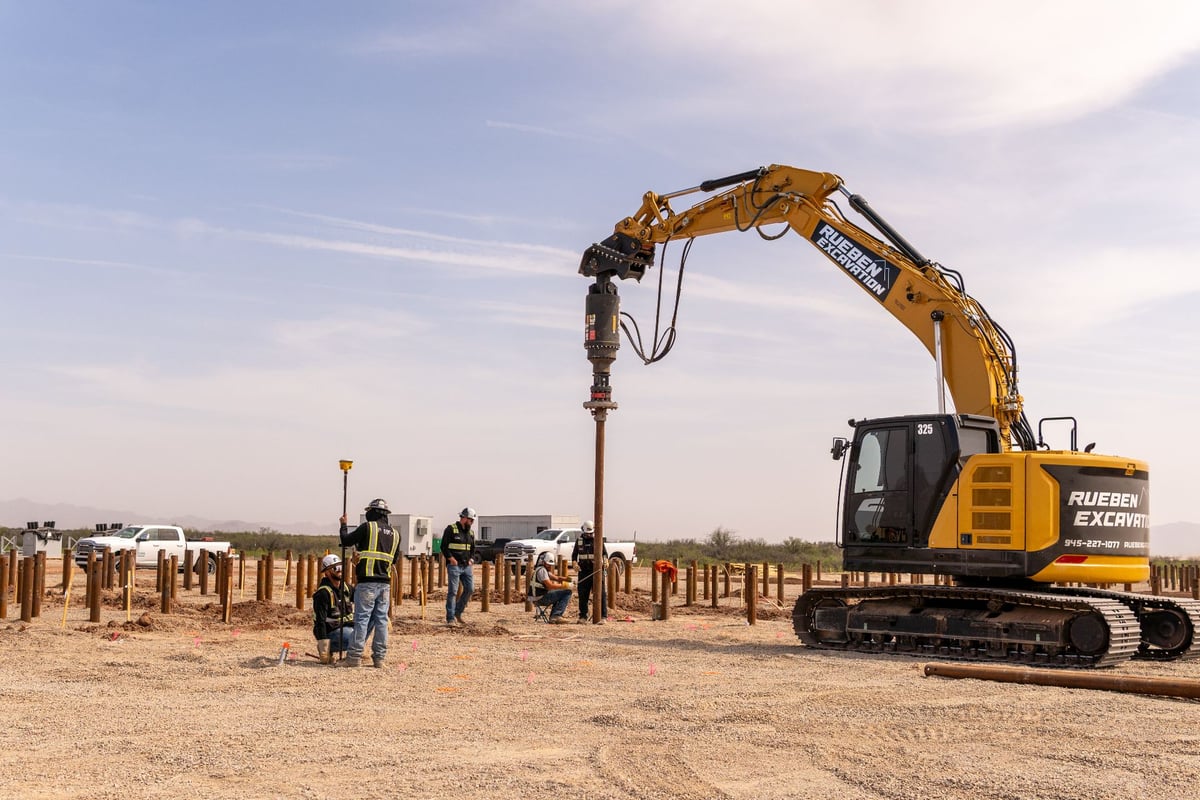
For that reason, physical reference points are established around the pile location before installation begins, using field controls including nails and offsets. Those references sit outside the immediate installation area, so they remain accessible once equipment is set up and the pile is in the ground.
During installation, crews reference the edge of the pile back to those established offsets rather than relying on the original layout point alone. The pile position can then be tied back to the original field control while the work is still in progress.
Verification
Verification throughout installation.
Pile layout establishes the intended installation point. Field verification continues as the pile advances, which is why the offsets are set before the equipment arrives rather than recreated afterward.
Using the established offsets, crews check the edge of the pile or pipe as installation progresses. Those repeated field checks reference the pile back to the same control used to set the location, so position can be evaluated against the applicable project requirements throughout installation instead of only at the start or only at completion.
These are field checks performed by the crew, not an automated instrument feed. What they provide is the ability to identify and address a position question while the equipment is still on the pile.
Two Requirements
Horizontal position & vertical elevation.
Horizontal position and vertical elevation are related but separate requirements. A pile can be required to meet both, and verifying one does not satisfy the other.
Horizontal Position
Where the pile sits in plan.
Horizontal control addresses the location of the pile in plan, referenced from the project coordinates through the field offsets to the installed center.
- → Pile locations taken from project coordinates
- → Required pile center established in the field
- → Physical offsets set around the installation location
- → Edge-of-pipe checks referenced back to those offsets
- → Installed center referenced through a center-point cap
- → Position verified against applicable project requirements
Vertical Elevation
Where the pile sits in elevation.
Vertical control addresses elevation, checked against the elevation requirements established for the foundation.
- → Project elevation requirements for the foundation
- → Elevation work performed with a Trimble DiNi digital level
- → Installed pile elevation checked in the field
- → Cutoff elevation recorded where the project requires it
- → Elevation information tied to the individual pile
Elevation
Elevation & cutoff verification.
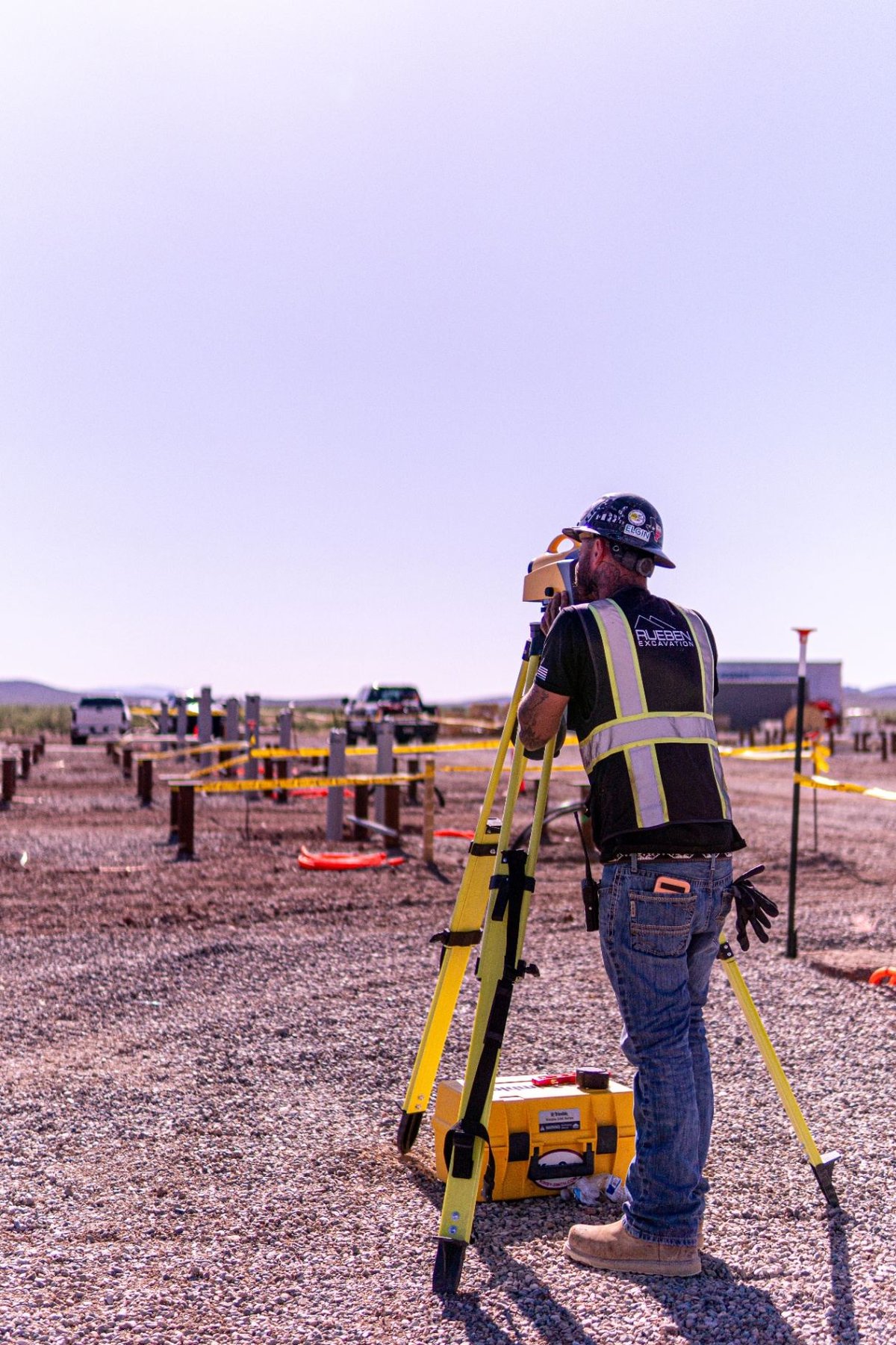
Position in plan is only part of the installation requirement. Structures and connections that follow the foundation depend on the installed pile meeting the applicable elevation requirements as well.
Rueben uses a Trimble DiNi digital level for elevation work on pile foundations. Elevation is checked in the field, and cutoff elevation is recorded as part of the pile information where the project requires it.
Elevation control is handled as its own verification step so it is not inferred from horizontal position work performed earlier in the sequence.
Field Sequence
From design point to installed pile.
01
Project Coordinates & Requirements
Pile locations and elevations originate from the project design and survey information, along with the positional and elevation requirements established by the engineer.
02
Pile Location Established
The required pile center is established in the field from the project coordinates, and pile locations are identified individually.
03
Physical Offsets Created
Physical field references, including nails and offsets, are set around the pile location so control remains available once the point is occupied.
04
Installation Equipment Positioned
Drive equipment moves onto the pile location. The original layout point is no longer accessible, but the surrounding offsets are.
05
Pile Installation
The helical pile is advanced by the crew while the established field control stays in place around the work.
06
Position Checks Against Offsets
Crews check the edge of the pile against the established offsets as installation progresses, referencing position back to the original field control.
07
Elevation & Cutoff Verification
Elevation is checked against the applicable project requirements using a Trimble DiNi digital level, and cutoff elevation is recorded where required.
08
Final Center & Installation Record
The installed center is referenced through a center-point cap and the resulting information is recorded against the individual pile.
Pile Record
Connecting field verification to the pile record.
Survey information and installation information are not separate records. Both can be associated with the same pile identification, which is what gives a project team traceability between field execution and project documentation.
Installation torque is another component of that same record, covered in our torque monitoring and installation documentation resource.
Exact documentation requirements vary by project and engineering specifications, so the content of a pile record is set by the project rather than by a fixed package.
- Pile Identification
- Field information is associated with the pile identification number assigned to that location in the foundation layout.
- Center Coordinates
- Center-of-pile coordinates from the installed pile, referenced through the center-point cap.
- Cutoff Elevation
- Cutoff elevation from the elevation verification work performed in the field.
- Installation Torque
- Installation torque monitored while the pile is advanced, covered in detail in the torque monitoring resource.
- Extensions, If Required
- Pile extensions documented where the installation required them.
- Installation Date
- The date the pile was installed, recorded as part of the pile information.
- Project Documentation
- Project photographs and related documentation maintained alongside the pile information.
Quality Control
Why field control matters.
Field control keeps the installed foundation tied to the intended layout. When references remain available through installation, position and elevation can be checked against project requirements as the work proceeds rather than reviewed after the crew has moved on.
It also supports coordination. Recorded coordinates and elevations give project management, engineering, and the crews that follow the foundation scope a common set of field information to work from.
The same practices carry across the foundation and civil scopes shown in our project experience.
For how layout control fits into the wider field sequence, including cutting and capping, see our helical pile installation process resource.
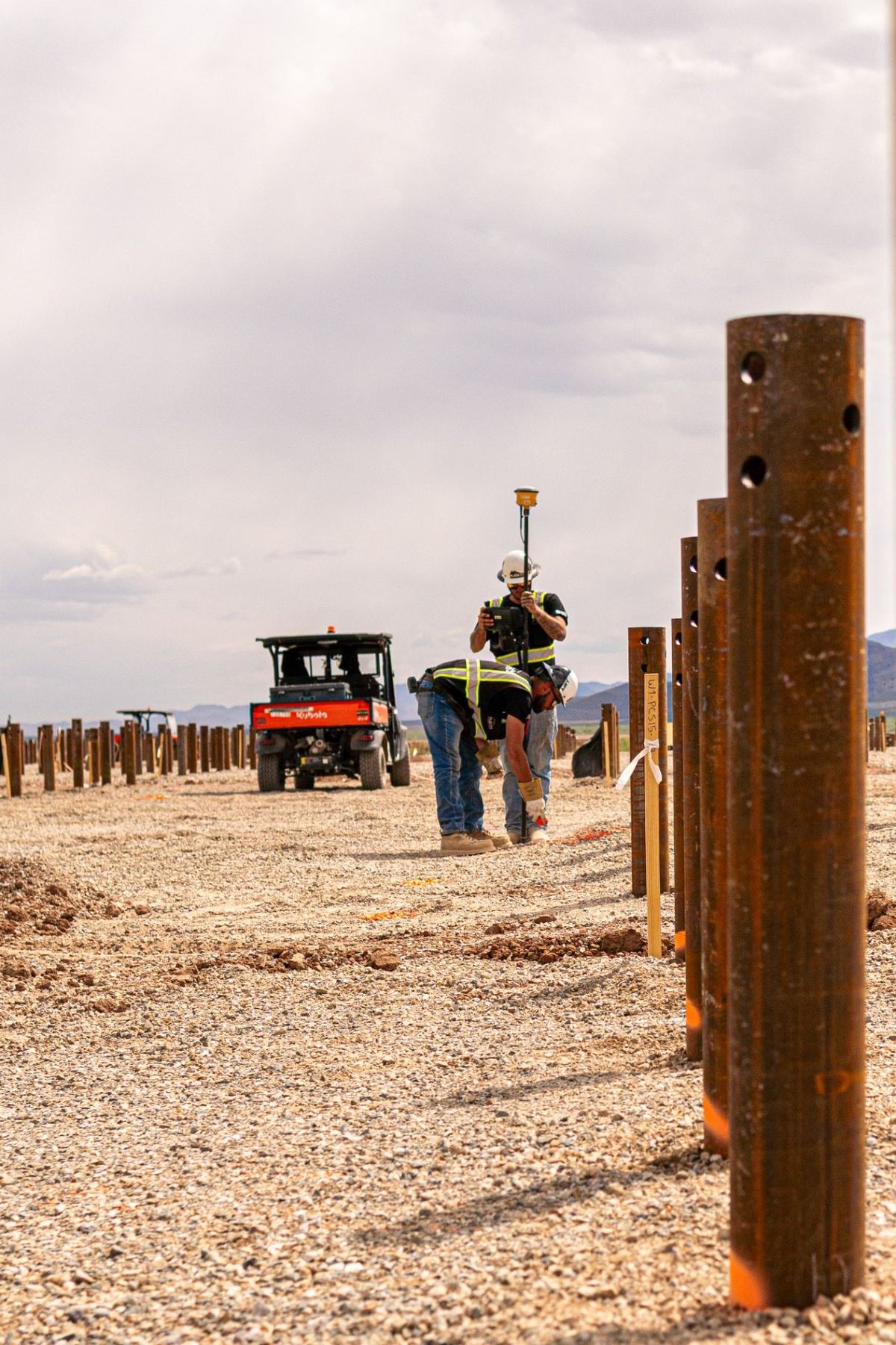
Execution Model
Survey control as part of foundation execution.
Rueben builds construction layout and field verification into the pile installation workflow rather than treating them as separate activities scheduled around it. The crew installing the foundation works from the same control used to set the layout.
That keeps project requirements, field layout, installation, position verification, elevation verification, and installation documentation connected through one workflow. The survey equipment supports that process; the execution is what determines the result.
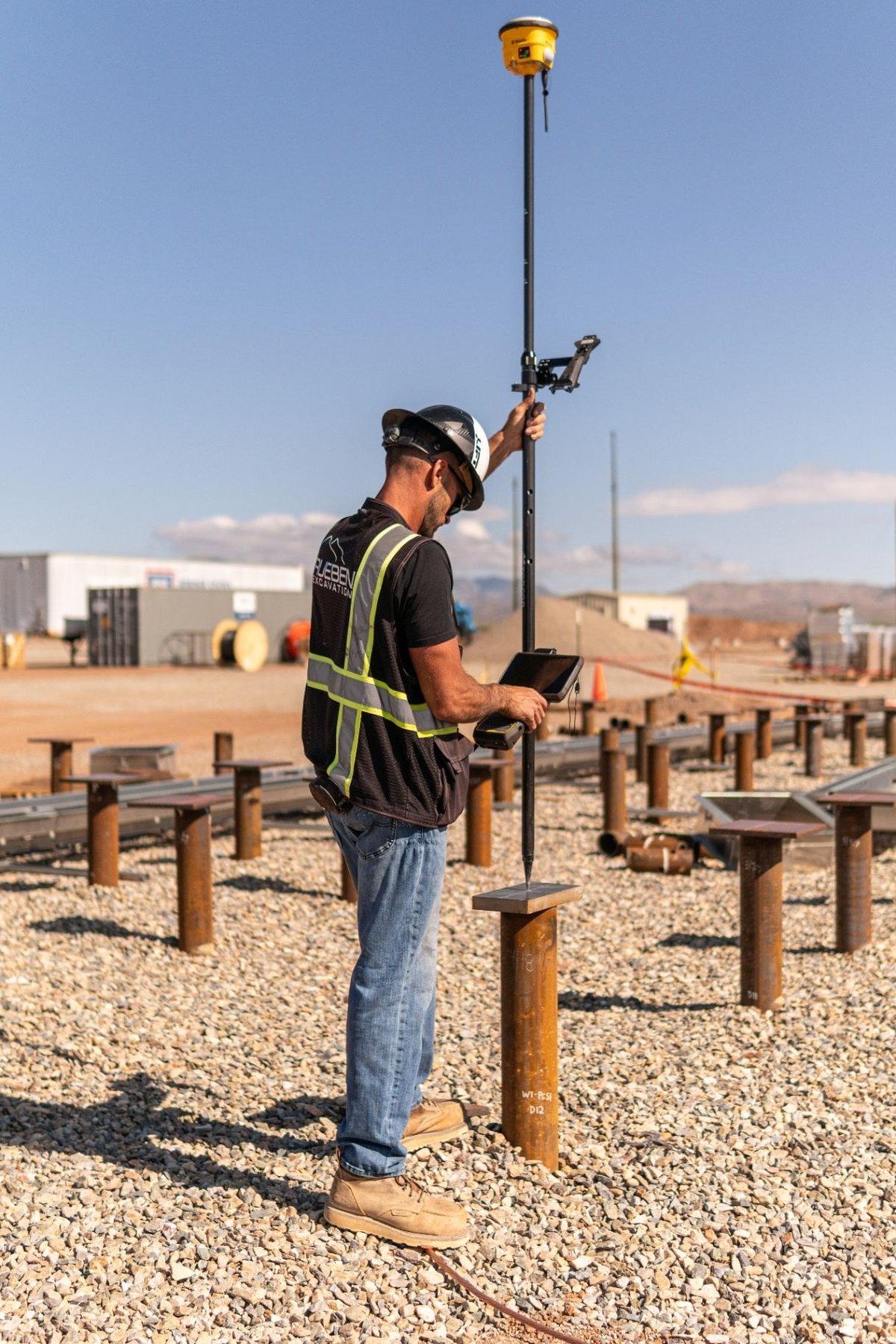
Pile Foundations by Rueben Group
Foundations laid out, installed, and verified in the field.
Rueben Group self-performs deep foundation scopes for energy, industrial, and civil infrastructure projects.
Related technical resources: Torque Monitoring & Installation Documentation and Helical Piles vs. Drilled Shafts.
- Survey-Controlled Layout
- Helical Piles
- Driven Piles
- Drilled Shafts
- Position & Elevation Verification
- Installation Documentation
Start the conversation
Let's talk about your foundation scope.
Whether you're planning a substation, Battery Energy Storage System (BESS), utility-scale solar development, or industrial project, our team can walk through layout, verification, and documentation expectations.Share your project details, and we'll connect with you on the right foundation approach and the best path forward.