

Resources / Foundation Installation
Helical pile installation: from layout to final connection.
Helical pile installation brings survey control, field execution, real-time torque monitoring, position and elevation verification, and the final foundation connection into one coordinated process.
Rueben Group coordinates each stage against project-specific requirements and documents the installed pile through completion.
Layout
Installation starts with field control.
A helical pile installation begins with project information rather than equipment. Pile locations originate from the project design and survey information, each location carries its own pile identification, and the applicable positional, elevation and acceptance requirements are established by the engineer and the project documents.
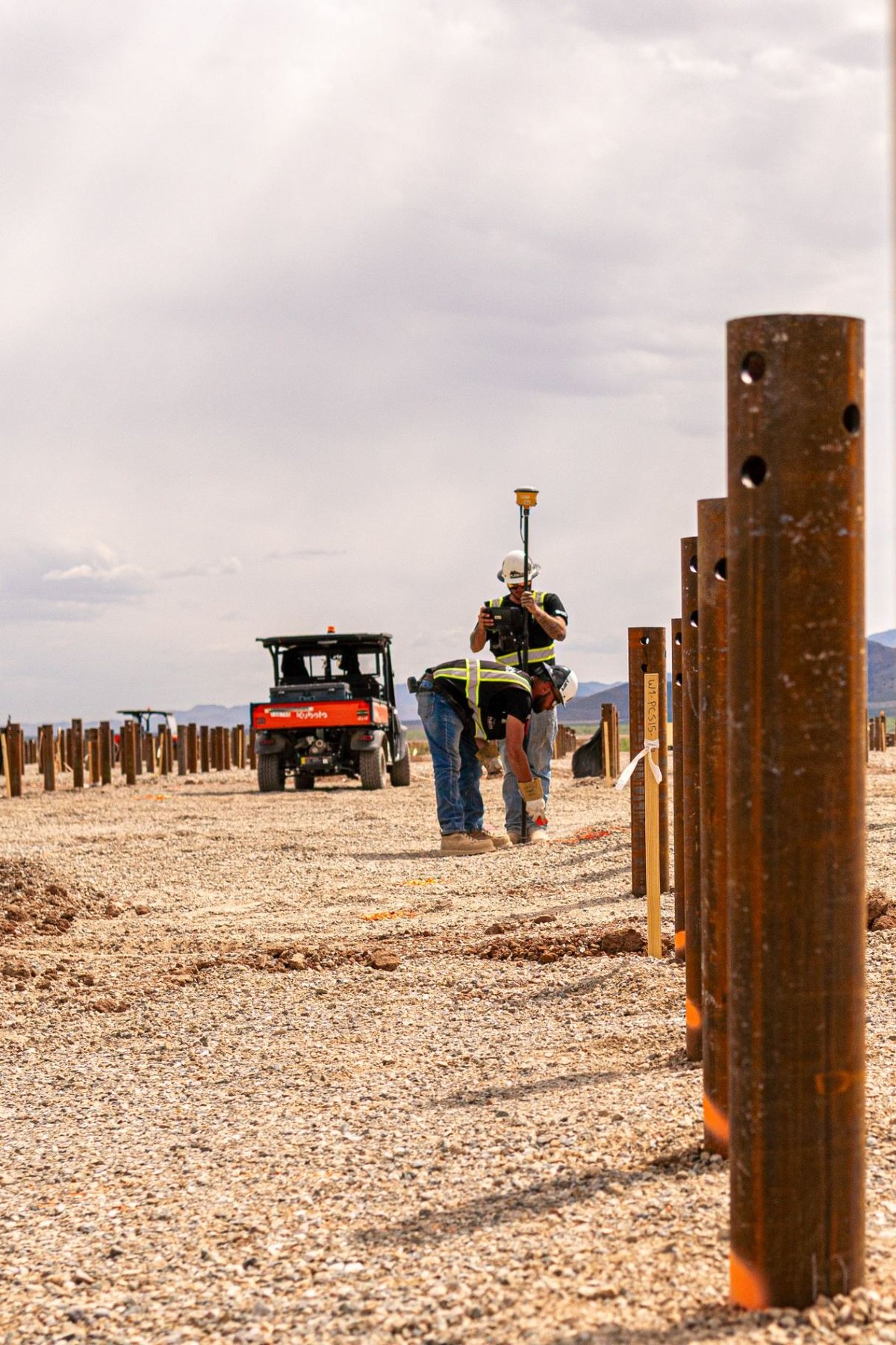
Rueben performs construction layout against those requirements using current Trimble survey equipment. Locations are then held with physical controls in the field, including nails and offsets set around each pile location.
That step matters because the crew needs references that remain usable once equipment moves into position and installation begins. The layout point itself is occupied by the pile; the surrounding offsets are not. The detail behind that work is covered in our survey-controlled pile installation resource.
Positioning
Positioning the pile for installation.
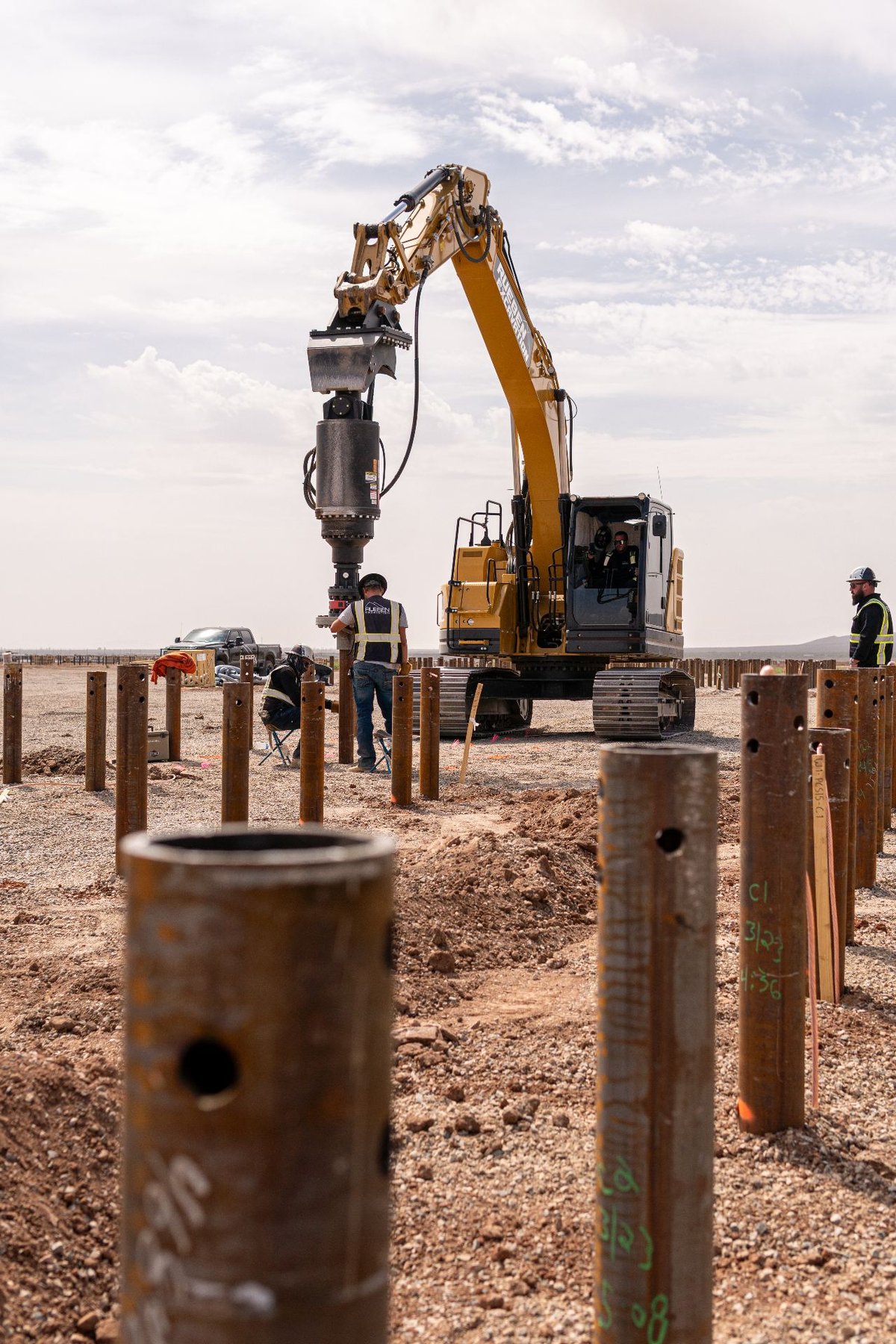
Installation equipment and the pile are positioned against the field layout that was already established, not against a location judged on the spot. The established point and its surrounding offsets are what the crew works from.
This stage is coordination work: survey control, equipment positioning, the pile center, and the field crew all have to agree before the pile is advanced. Getting that agreement before installation begins is what allows position to be referenced consistently later in the sequence.
Foundation installation is also coordinated with the conditions and construction sequence established across the site. Where Rueben is also performing civil and site development, that coordination can extend from site preparation and grading into foundation layout and installation.
Installation
Helical pile installation.
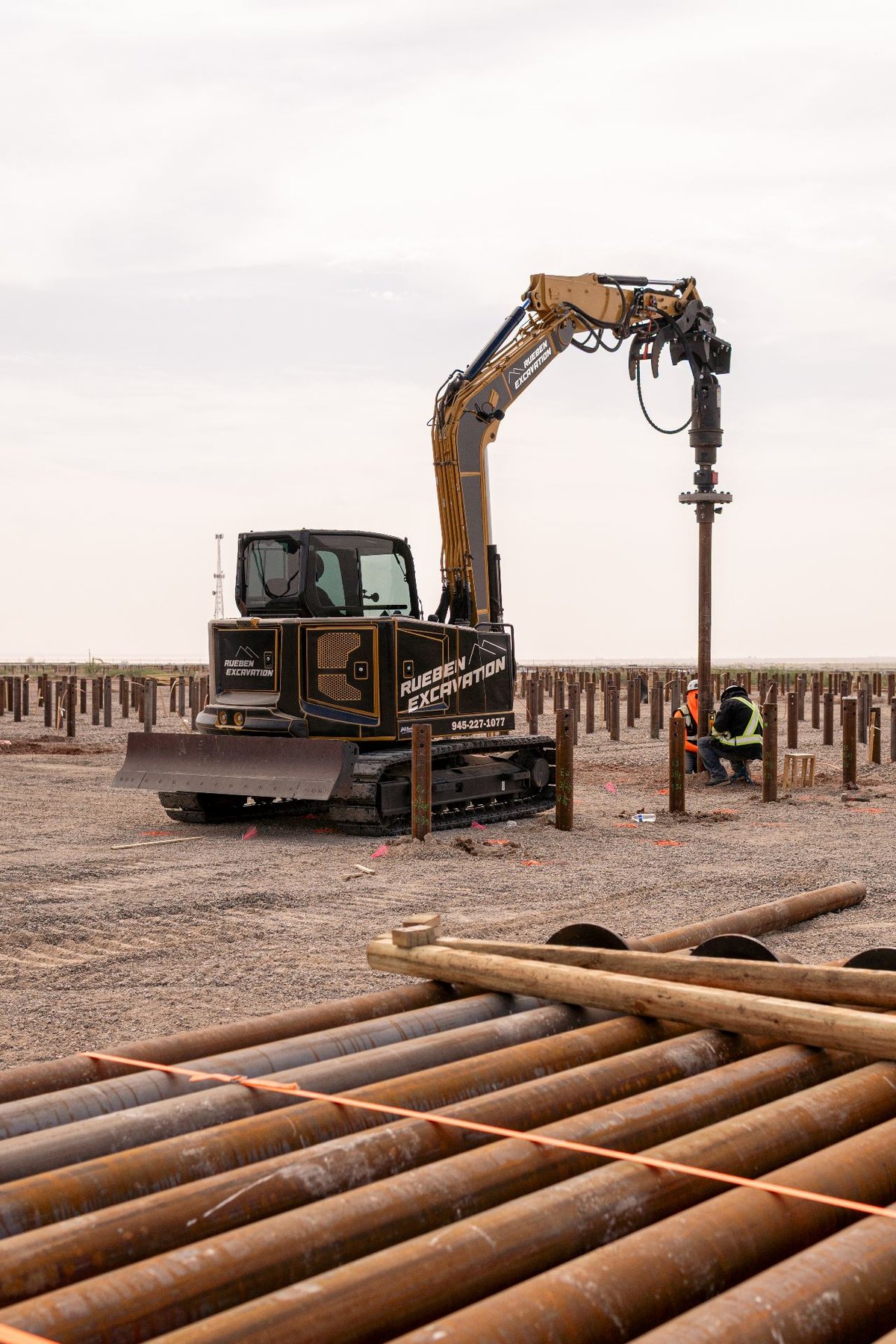
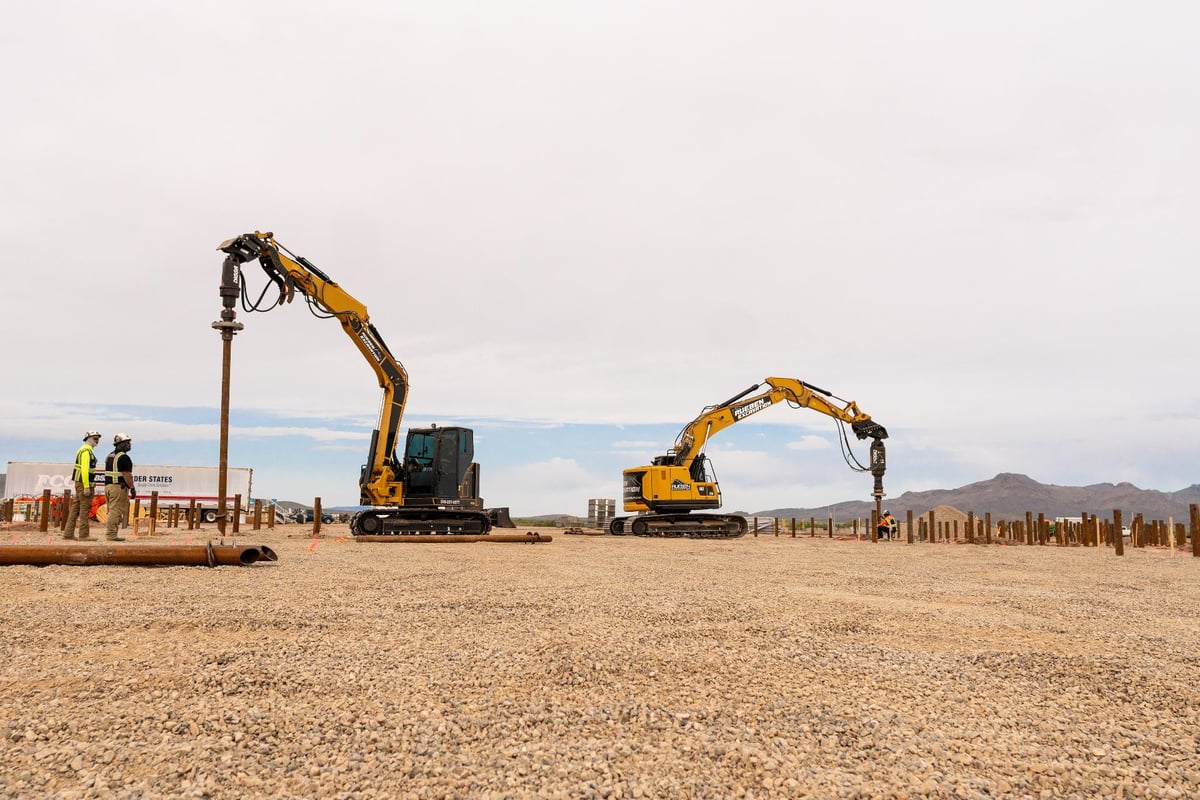
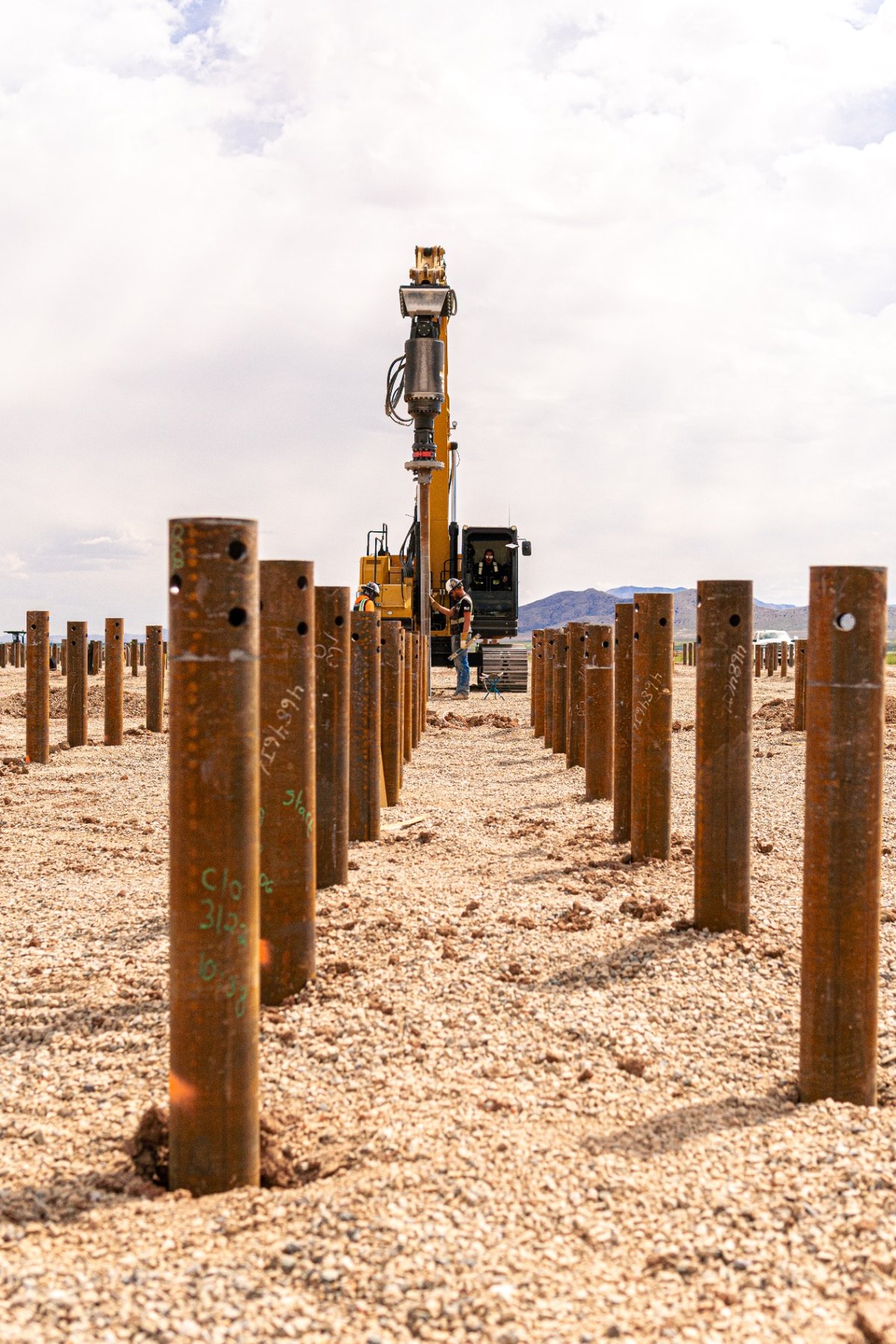
The pile is advanced into the ground using rotational force. Rueben self-performs this work with Digga installation equipment, and installation proceeds in accordance with the applicable project requirements.
The crew monitors the installation as the pile advances rather than reviewing it afterward. Position can continue to be referenced against the established field control, and pile extensions are added where the installation requires them.
Monitoring
Monitoring installation torque.
Installation torque is monitored in real time as the pile advances and is recorded for every pile.
Field readings are compared with the applicable project-specific requirements, including the minimum installation torque or other acceptance criteria established by the engineer.
The monitoring and documentation process is covered in our helical pile torque monitoring and installation documentation resource.
Extensions
Pile extensions.
Pile extensions may form part of the installation where the project requires them.
When extensions are used, they are documented against the individual pile so the installed configuration stays traceable to that location.
Verification
Position & elevation verification.
Field control does not end at layout. The physical offsets set before installation remain the reference for checking pile position while the work is in progress and after the pile is in the ground.
Rueben uses Trimble survey equipment for construction layout and verification, and a Trimble DiNi for elevation work. Cutoff elevation forms part of the pile information where the project requires it.
Applicable tolerances come from the engineer and the project documents, not from the installing contractor.
Cutoff
Cutting to the required elevation.
After installation and the applicable field verification, the pile may be cut to the required cutoff elevation as part of preparing the final foundation connection.
Cutoff is controlled against the project requirements rather than set in the field independently, and the resulting elevation forms part of the pile information where the project calls for it.
Final Connection
Why field cutting & capping matters.
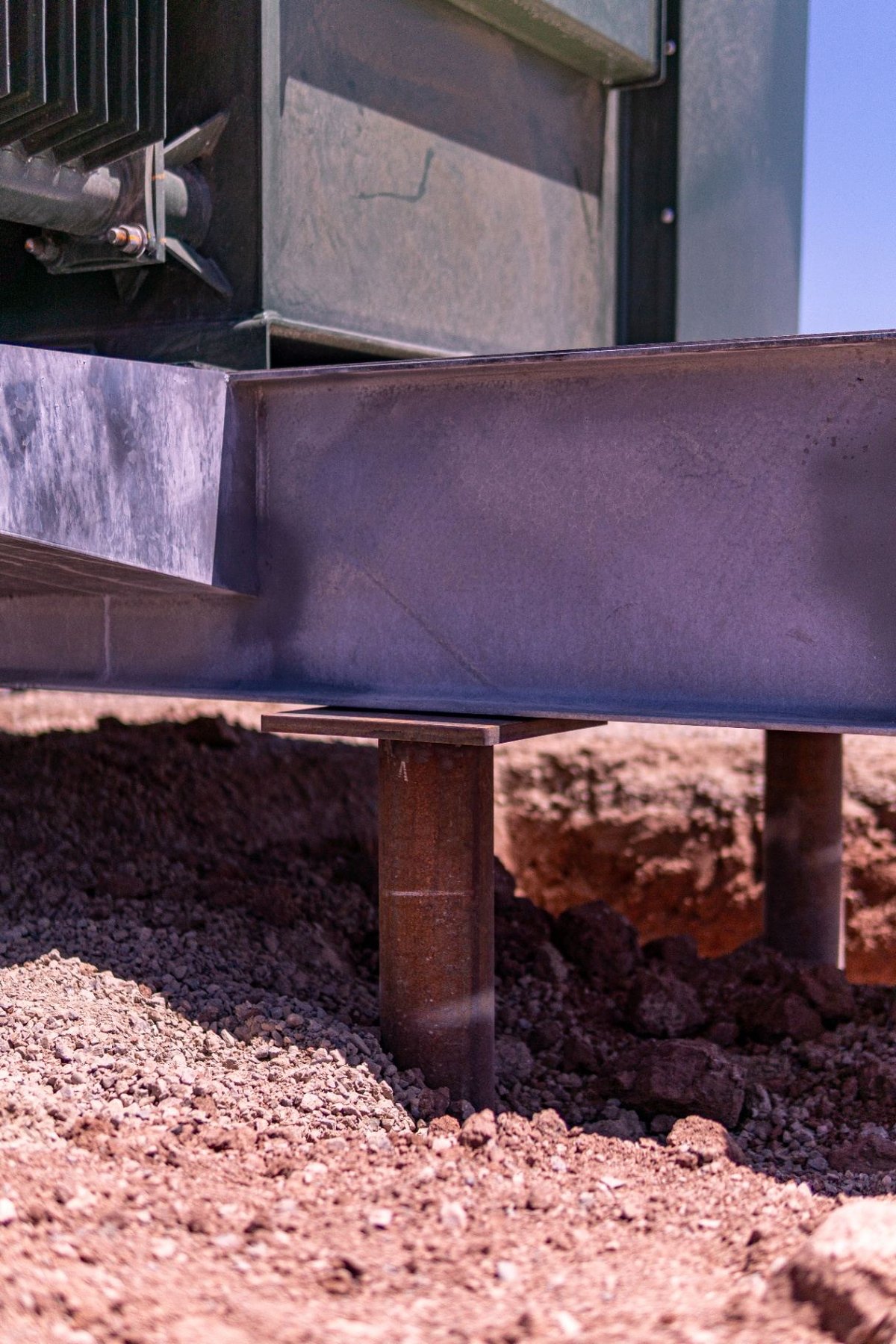
Pile installation begins from a controlled survey location and position is checked as installation progresses. Installation still takes place in real field conditions, and the finished connection has to align with the required foundation geometry above it.
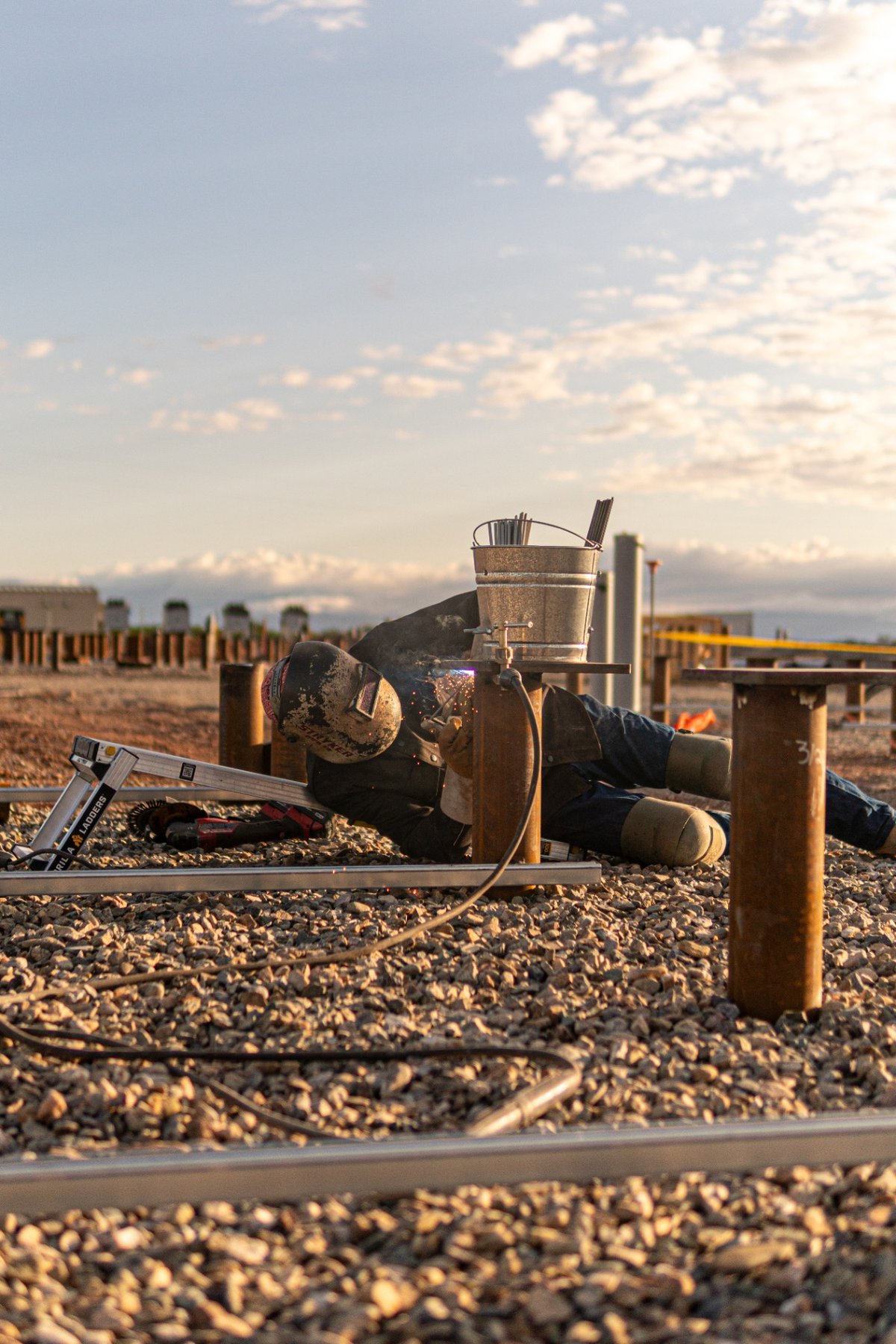
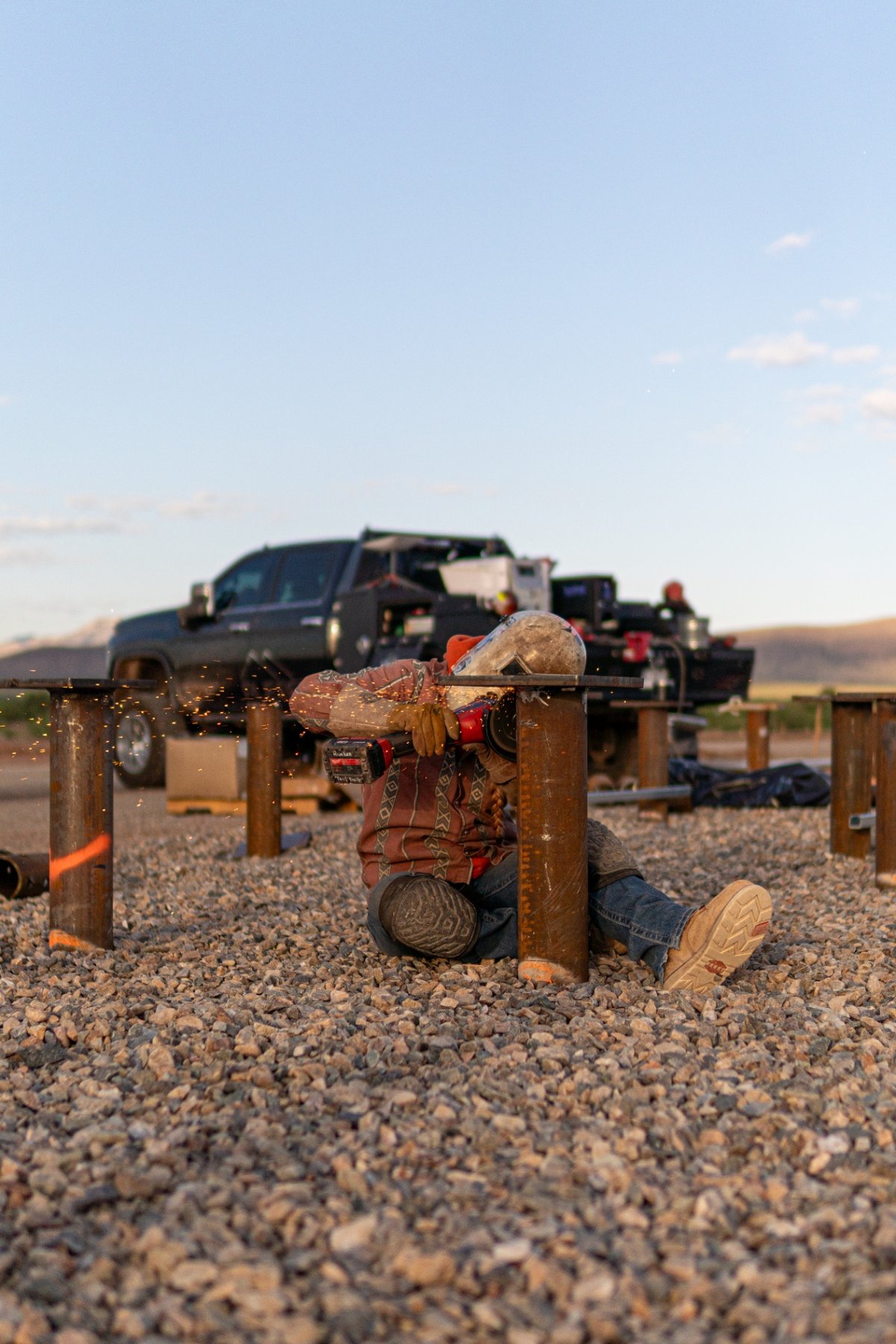
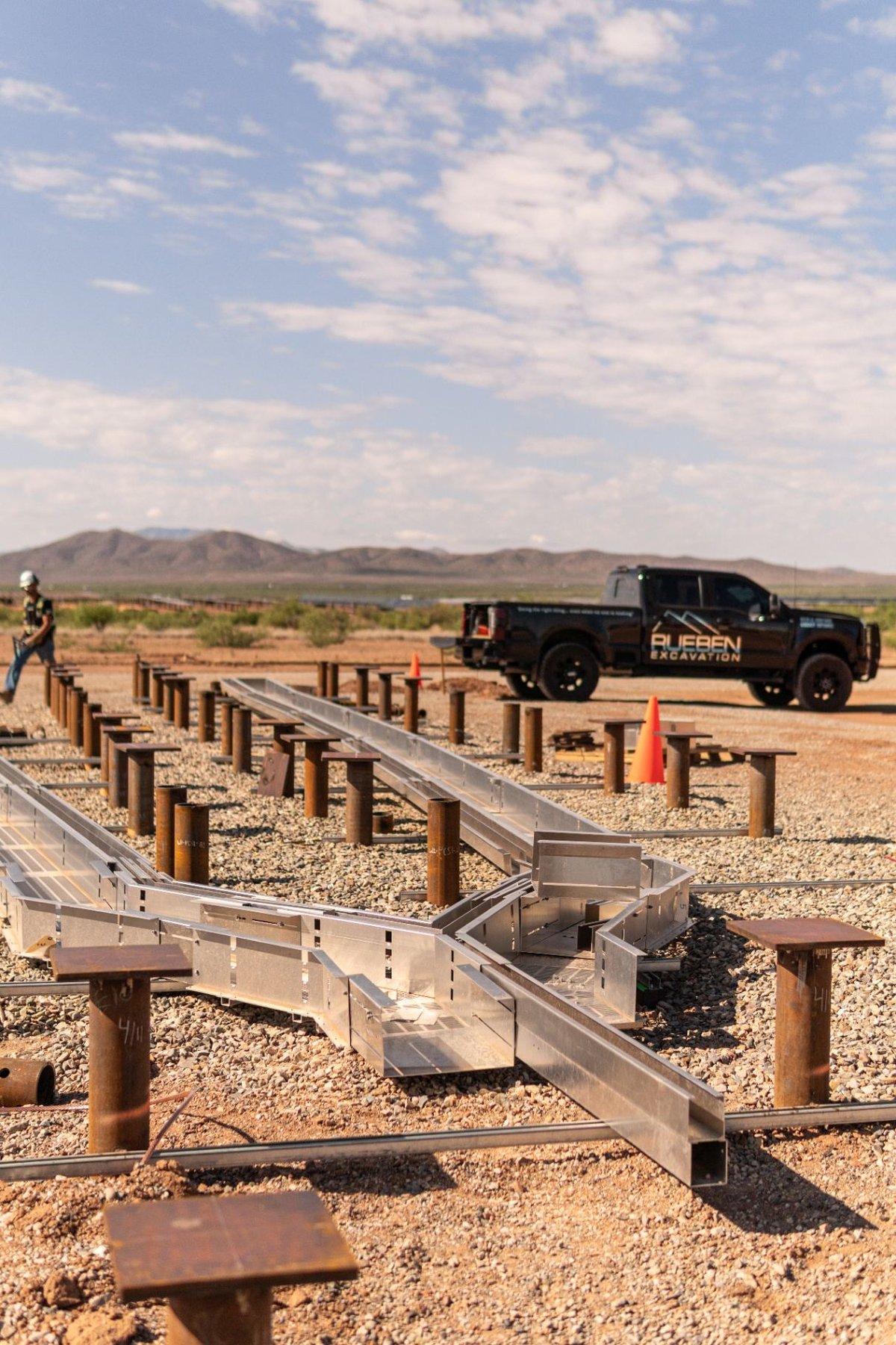
Field cutting and capping allows the final cap position to be established after the pile has been installed and verified. That provides controlled adjustment at the connection point where tight alignment requirements apply, while the applicable project requirements still govern the result.
Maintaining survey control throughout installation and completing the final connection in the field provides another opportunity to align the finished connection with the required foundation geometry.
Whether field capping is the right approach depends on the project. Where it is, Rueben self-performs the cap work through our welding and fabrication crews, which keeps the foundation and the connection under one scope.
Field Sequence
From layout to final connection.
The installation sequence below is how a helical pile moves from project information to a documented, connected foundation element.
- 01
Project Requirements
Design and survey information, pile identification, and the applicable acceptance requirements established by the engineer and project documents.
- 02
Survey Layout
Pile locations are established in the field from the project coordinates using current Trimble construction survey equipment.
- 03
Physical Offsets
Nails and offsets are set around each location so field control remains available once the point is occupied.
- 04
Pile & Equipment Positioning
Installation equipment and the pile are positioned against the established field layout by the crew.
- 05
Helical Pile Installation
The pile is advanced into the ground using rotational force with Digga installation equipment, in accordance with the applicable project requirements.
- 06
Torque Monitoring
Installation torque is monitored in real time and recorded for every pile against the project-specific requirements.
- 07
Extensions, If Required
Pile extensions are added where the installation requires them and are documented against the individual pile.
- 08
Position / Elevation Verification
Position is referenced back to the established offsets, and elevation work is performed with a Trimble DiNi digital level.
- 09
Pile Cutoff
Once the installed condition has been established against project requirements, the pile may be cut to the required cutoff elevation.
- 10
Field Cap Positioning
The cap is positioned and aligned in the field to suit the required foundation geometry at the connection point.
- 11
Installation Documentation
Field information from the sequence is recorded against the individual pile as the project requires.
Documentation
Closing the installation record.
Installation is finished when the field information has been tied back to the individual pile. Layout, installation, monitoring, verification and cutoff all reference the same pile identification, which is what gives a project team traceability from the foundation plan to the installed element.
Depending on project requirements, the pile record can include the items listed here. Documentation requirements vary by project and specification, so the content of a record is set by the project rather than by a fixed package.
- Pile number
- Center coordinates
- Installation torque
- Cutoff elevation
- Extensions, where used
- Installation date
- Project photographs
Controls
One installation process, multiple controls.
Foundation execution runs several related controls at once. Each one covers a different part of the installed result.
- Location
- Survey layout from project coordinates, held through installation with physical offsets.
- Installation
- Digga installation equipment and crew execution against the applicable project requirements.
- Installation Performance
- Real-time torque monitoring, recorded for every pile.
- Elevation
- Elevation work and cutoff verification using a Trimble DiNi digital level.
- Final Connection
- Cutting to the required elevation and aligning the field cap with the required foundation geometry.
- Documentation
- Field information tied back to the individual pile record as the project requires.
Foundation scopes executed this way are shown in our project experience.
Helical Pile Foundations by Rueben Group
Foundations installed, verified, and documented in the field.
Rueben Group self-performs deep foundation scopes for energy, industrial, and civil infrastructure projects.
Selecting a foundation system? Read Helical Piles vs. Drilled Shafts.
Start the conversation
Let's talk about your foundation scope.
Whether you're planning a substation, Battery Energy Storage System (BESS), utility-scale solar development, or industrial project, our team can walk through installation, verification, and documentation expectations.Share your project details, and we'll connect with you on the right foundation approach and the best path forward.