

Resources / Foundation Installation
Helical pile torque monitoring & installation documentation.
Helical pile installation involves more than reaching the required depth. Installation torque, pile position, elevation, and field records provide project teams with documented information from the installation process.
Rueben Group monitors installation against project-specific requirements and maintains pile records that support field verification, quality control, and project documentation.
Installation Torque
Why installation torque is monitored.
Helical piles are advanced into the ground using rotational force. The torque required to advance the pile changes with the material the helix is passing through, which makes installation torque useful field information while the pile is being installed.
Project engineers may establish minimum installation torque requirements or other acceptance criteria for a foundation system. Installation torque provides field information that can be evaluated against those project-specific engineering requirements.
Monitoring torque during installation allows the crew to compare what is happening in the field against the applicable project requirements while the equipment is still on the pile, rather than after the fact.
Measurement and engineering interpretation remain separate. Rueben records what is measured in the field. The engineer of record establishes the requirements and determines how field information is evaluated.
What Is Monitored In The Field
- → Installation torque, monitored in real time
- → Torque recorded for every pile
- → Installation compared against project requirements
- → Pile position and alignment under survey control
- → Cutoff elevation
- → Individual pile records and log sheets
Field Execution
Real-time torque monitoring during installation.
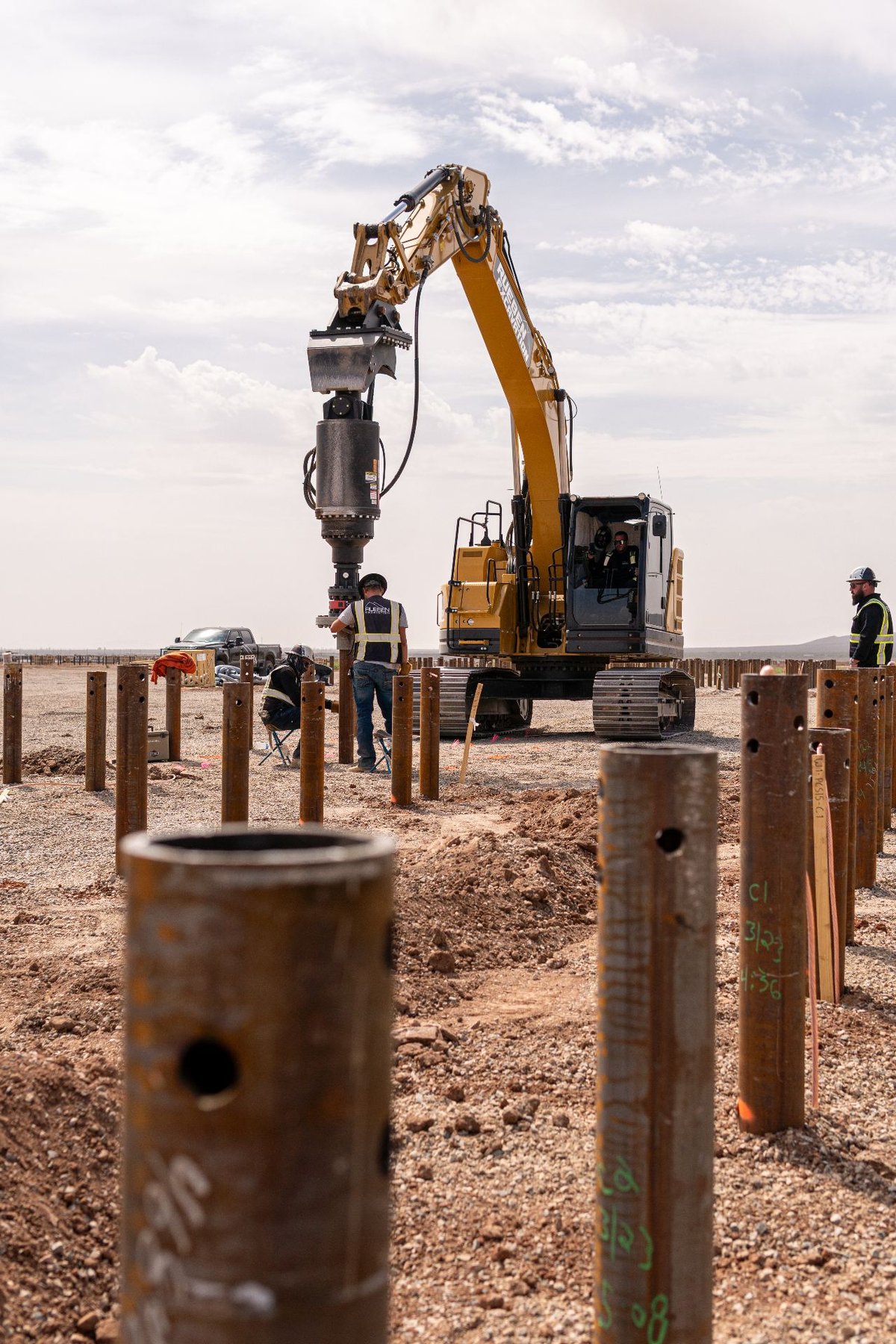
Rueben crews install helical piles using Digga installation equipment. As the pile is advanced, installation torque is monitored in real time and the crew compares installation against the applicable engineer-established project requirements.
Torque is recorded for every pile, and individual pile torque records and log sheets are maintained through installation. On projects where installation torque forms part of the specified acceptance criteria, those records become part of the information provided to the project team.
Conditions outside the specified installation requirements are addressed through the project's established field coordination and engineering process.
Pile Installation Records
Every pile has a record.
Installation documentation connects the completed foundation back to the field measurements and information recorded during construction. Depending on project requirements, pile documentation can include the following.
- Pile Number
- Each pile is assigned a pile number so field information can be tied back to a specific location in the foundation layout.
- Center Coordinates
- Center-of-pile coordinates are recorded. A center-point cap is used to establish and reference the pile center.
- Installation Torque
- Installation torque is monitored in real time and recorded for every pile as it is installed.
- Cutoff Elevation
- Pile cutoff elevation is recorded using Trimble survey equipment, including a Trimble DiNi for elevation work.
- Extensions, If Required
- Pile extensions are documented where required by the installation.
- Installation Date
- Installation dates are recorded as part of the pile documentation.
- Project Photographs
- Project photographs are included within Rueben's project and installation documentation.
Exact documentation requirements vary by project and engineering specifications.
Survey Control
Survey control & elevation verification.
Torque monitoring is one component of installation control. A helical pile foundation also requires control and verification of position, alignment, and elevation.
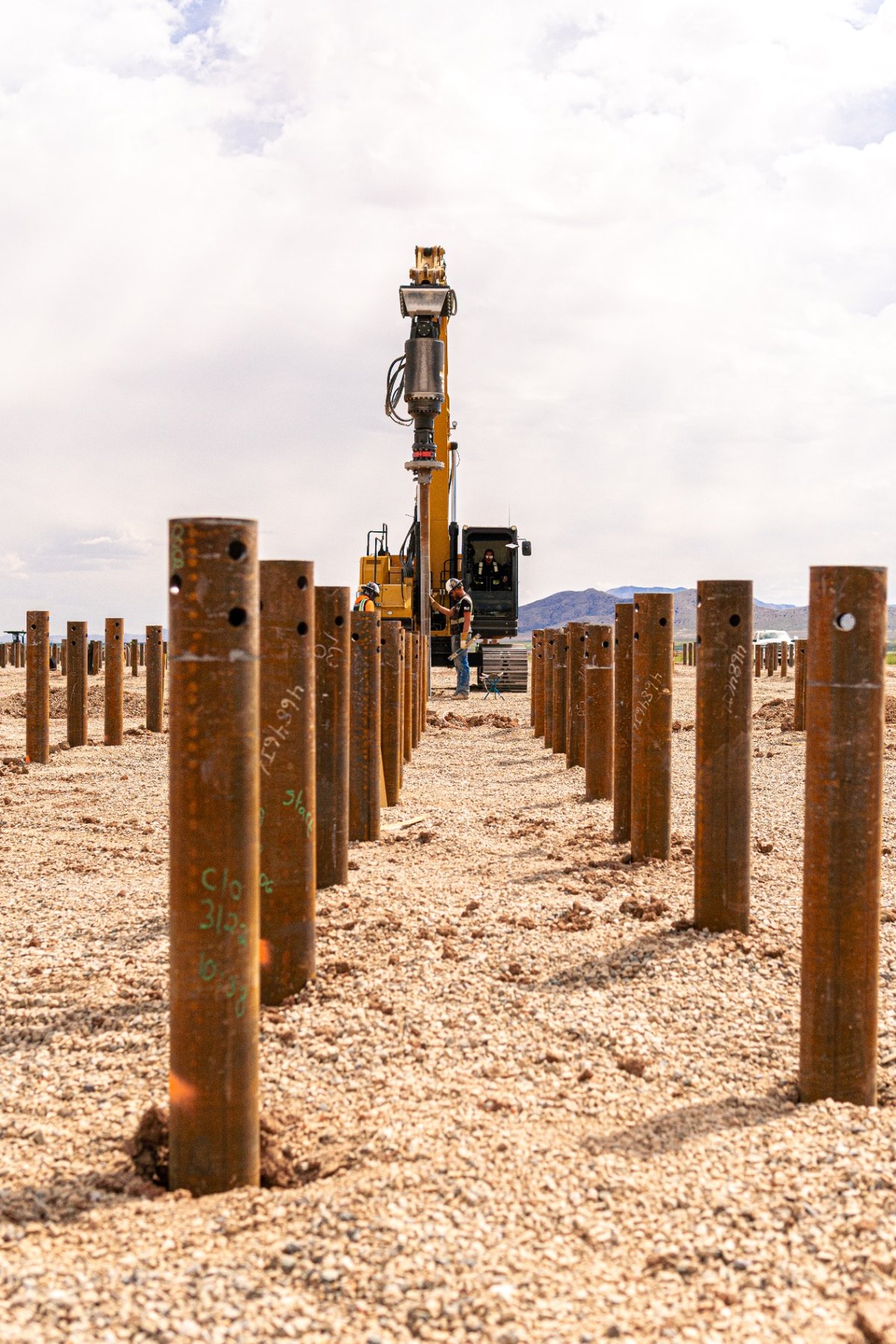
Rueben installs under survey-controlled layout, records center-of-pile coordinates, and performs field verification using Trimble survey equipment. A Trimble DiNi is used for elevation work, including recording pile cutoff elevation.
The field controls behind that work are covered in our survey control during pile installation resource.
How torque monitoring fits alongside layout, verification, cutoff and the final connection is outlined in our helical pile installation process resource.
Installation Sequence
From engineering requirements to field documentation.
01
Engineering Requirements
Project engineers establish the applicable project-specific requirements, which may include minimum installation torque, design requirements, tolerances, and acceptance criteria.
02
Survey & Pile Identification
Pile locations are set under survey control, pile numbers are assigned, and center-of-pile coordinates are referenced through a center-point cap.
03
Pile Installation
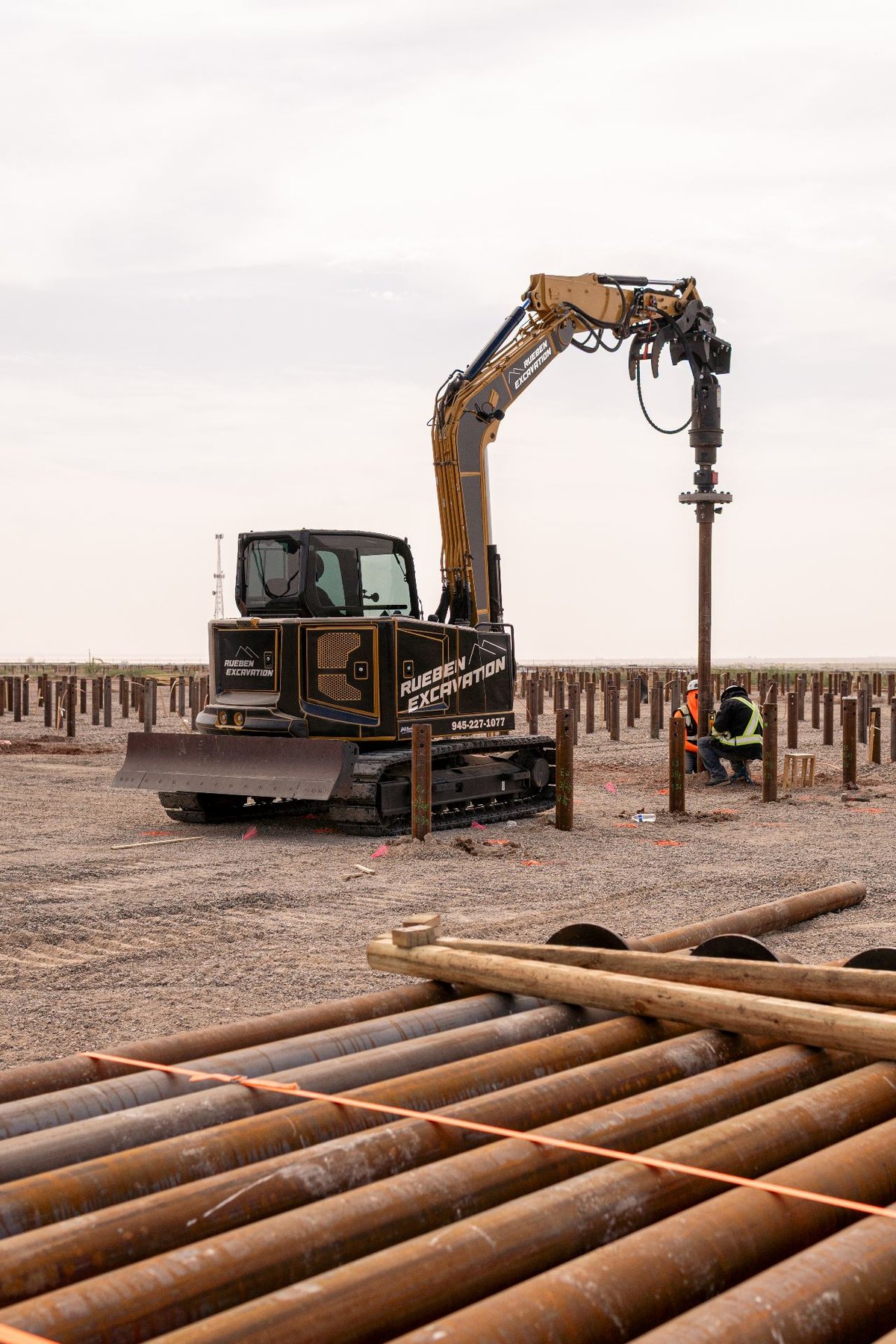
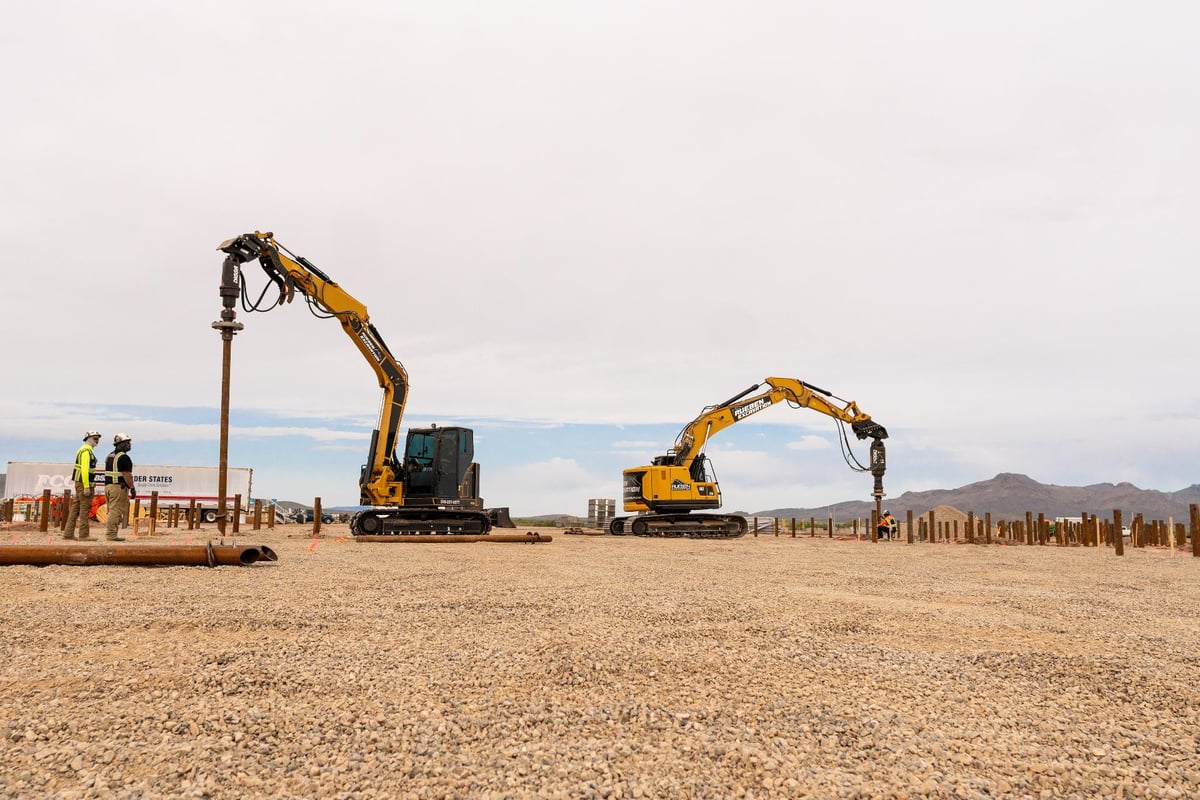
Helical piles are advanced into the ground using Digga installation equipment operated by Rueben crews.
04
Real-Time Torque Monitoring
Installation torque is monitored in real time and compared against the applicable engineer-established project requirements.
05
Elevation & Field Verification
Position, alignment, and cutoff elevation are verified in the field using Trimble survey equipment and a Trimble DiNi for elevation work.
06
Pile Installation Documentation
Recorded field information is compiled into pile installation documentation in the format the project requires.
Quality Control
Why installation documentation matters.
Pile records give a project team traceability. When information is tied to an individual pile number, field questions can be answered against what was recorded during installation instead of relying on recollection.
Documentation also supports quality control and field coordination. Recorded torque, coordinates, and elevation allow installation to be reviewed against project requirements while construction is still underway, which keeps field crews, project management, and engineering working from the same information.
At closeout, the same records support project documentation and turnover packages. These practices carry across the foundation and civil scopes shown in our project experience.
Pile Foundations by Rueben Group
Foundations installed and documented in the field.
Rueben Group self-performs deep foundation scopes for energy, industrial, and civil infrastructure projects.
Selecting a foundation system? Read Helical Piles vs. Drilled Shafts.
- Helical Piles
- Driven Piles
- Drilled Shafts
- Survey-Controlled Layout
- Load Testing
- Foundation Installation
Start the conversation
Let's talk about your foundation scope.
Whether you're planning a substation, Battery Energy Storage System (BESS), utility-scale solar development, or industrial project, our team can walk through installation requirements, monitoring, and documentation expectations.Share your project details, and we'll connect with you on the right foundation approach and the best path forward.