

Resources / Foundation Guide
Helical piles vs. drilled shafts: a comparison guide.
Helical piles and drilled shafts are two of the most common deep foundation systems used on utility-scale energy, industrial, commercial, and civil infrastructure projects. Each system has strengths suited to specific project conditions, structural loads, and construction requirements.
This guide compares helical piles and drilled shafts across installation, capacity, site conditions, schedule, and applications to help project teams understand when each system is typically used.
Helical Piles
Torque-verified deep foundations.
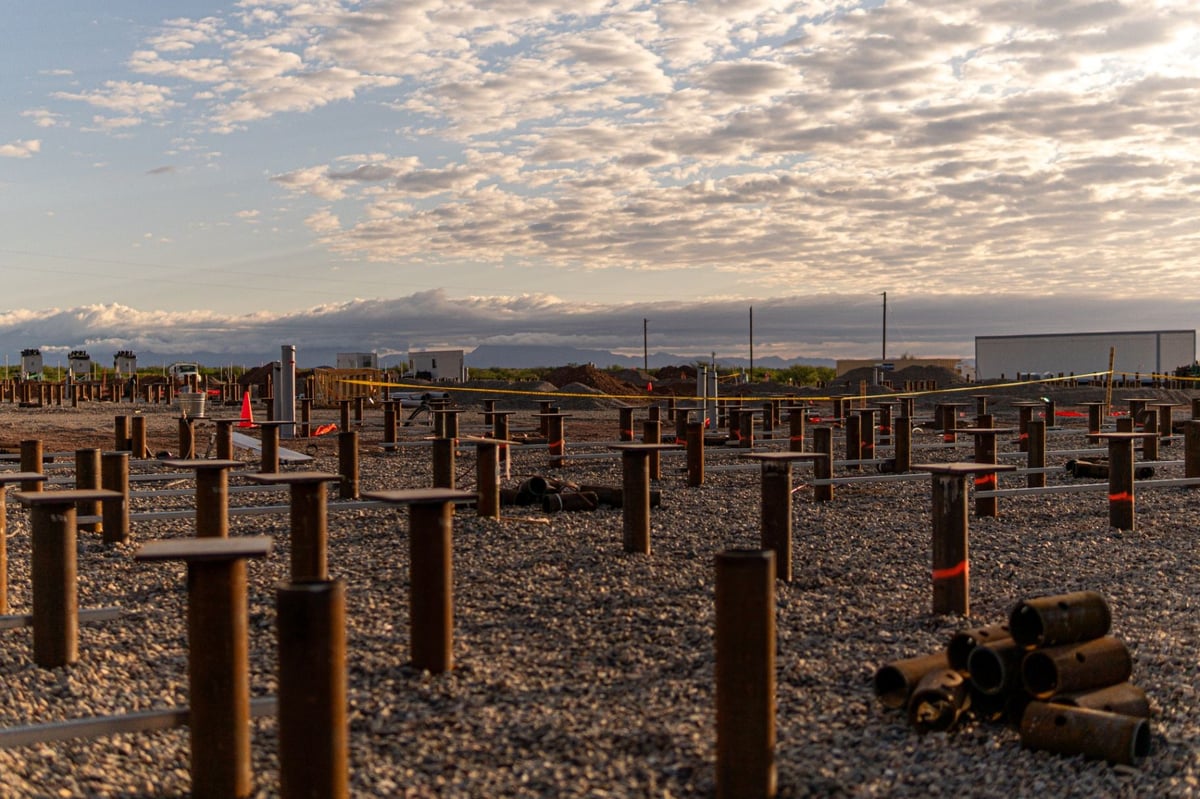
Helical piles are steel shafts with one or more helix-shaped bearing plates that are hydraulically rotated into the ground. Installation torque is monitored in real time and evaluated against the acceptance criteria established by the engineer and the project documents, and piles can typically be loaded immediately after installation.
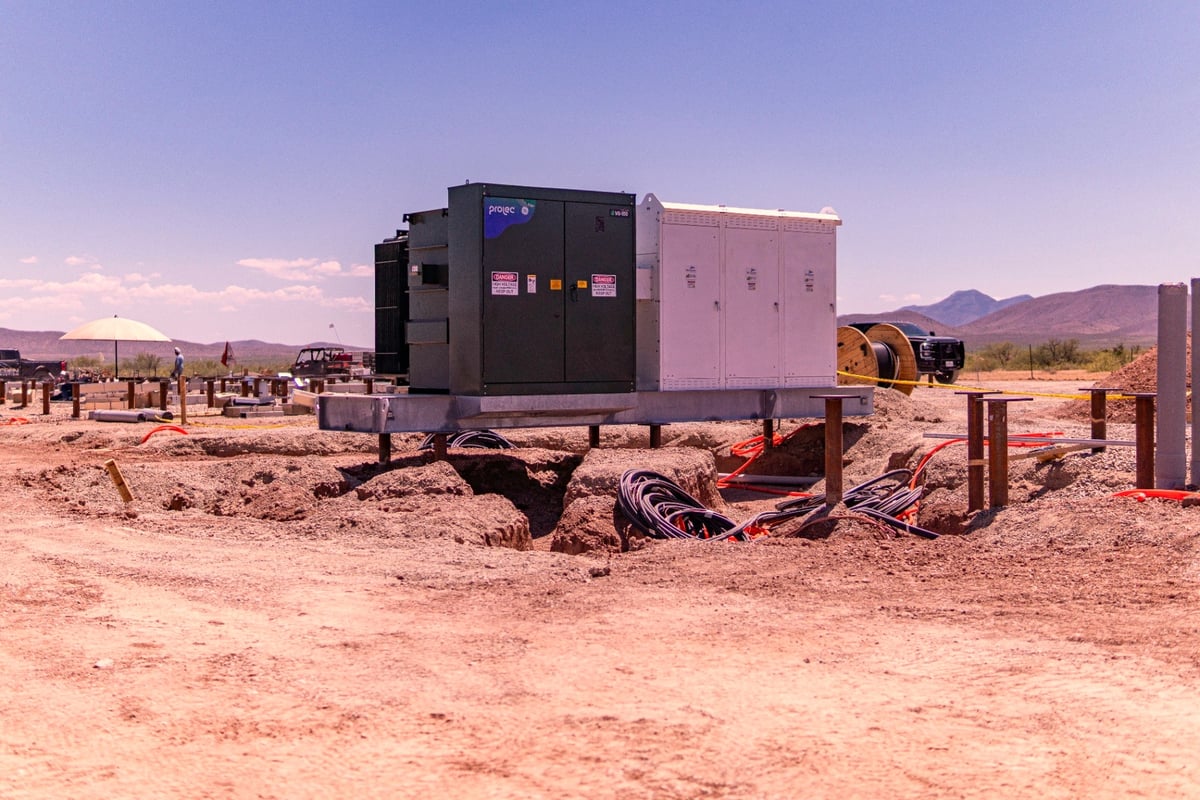
Helical piles are commonly used for substations, Battery Energy Storage Systems (BESS), utility-scale solar developments, equipment foundations, and structural foundations where torque verification, minimal spoils, and construction efficiency are priorities.
Drilled Shafts
Cast-in-place deep foundations.
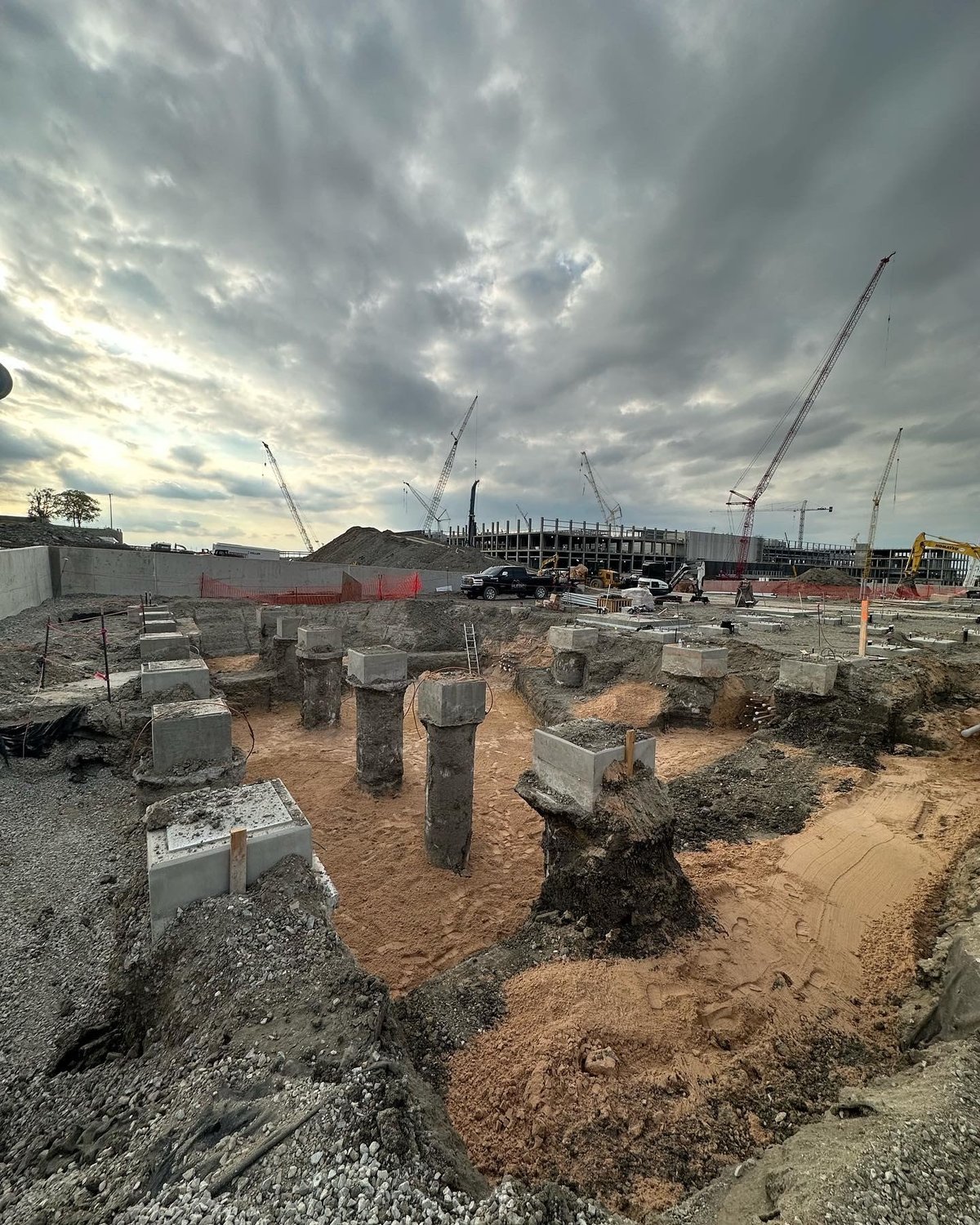
Drilled shaft foundations are constructed by excavating a cylindrical shaft, placing a reinforcing cage, and casting concrete in place. They are well suited to applications requiring higher axial and lateral capacities or larger-diameter foundations.
Drilled shafts are frequently used for transmission structures, heavy equipment foundations, bridge foundations, and other structures requiring large-diameter deep foundation systems.
Side-by-Side Comparison
How helical piles and drilled shafts compare.
| Factor | Helical Piles | Drilled Shafts |
|---|---|---|
| Installation Method | Hydraulically rotated into the ground using torque-controlled equipment. No excavation or spoils. | Auger or drilling rig excavates a shaft, reinforcing cage is placed, and concrete is poured in place. |
| Typical Load Capacity | Light to heavy axial and lateral loads. Capacity verified in real time through installation torque. | Moderate to very high axial and lateral loads, including large-diameter shafts for heavy structural foundations. |
| Site Conditions | Well suited to a range of soils, high water tables, and sites where excavation, spoils, or vibration must be minimized. | Effective in soils and weathered rock where larger-diameter, higher-capacity shafts are required. |
| Installation Verification | Torque monitoring during installation provides real-time capacity verification. Load testing performed when specified. | Verified through concrete placement records, reinforcement inspection, and load testing as required by project specifications. |
| Schedule Considerations | Immediate load-bearing capacity once installed. No concrete cure time required, which can support faster construction sequencing. | Requires concrete cure time before loading. Often used where higher capacity outweighs schedule considerations. |
| Site Impact | Minimal spoils, limited site disturbance, and reduced restoration requirements. | Generates spoils from shaft excavation that require management and disposal. |
| Common Applications | Substations, Battery Energy Storage Systems (BESS), utility-scale solar, equipment foundations, and structural foundations. | Transmission structures, heavy equipment foundations, bridges, and structures requiring large-diameter deep foundations. |
When Helical Piles Are Typically Used
- Substation equipment and structural foundations
- Battery Energy Storage System (BESS) foundations
- Utility-scale solar developments
- Sites where minimal spoils and site disturbance are required
- Projects requiring real-time capacity verification through torque monitoring
- Schedules that benefit from immediate load capacity after installation
When Drilled Shafts Are Typically Used
- Transmission structure foundations
- Heavy equipment and industrial structural foundations
- Bridges and civil infrastructure
- Projects requiring large-diameter deep foundation systems
- Applications requiring high axial and lateral load capacities
- Sites and structures where cast-in-place foundations are specified
Choosing the Right Foundation System
Foundation selection is project-specific.
The right foundation system depends on geotechnical conditions, structural loads, project specifications, site constraints, and construction schedule. Helical piles, driven piles, and drilled shafts each have applications where they are the most appropriate solution.
Decisions are typically made in coordination with project engineers, geotechnical recommendations, and construction teams. Selecting a foundation system early in the project allows installation to be coordinated with earthworks, underground utilities, and other civil construction activities.
For details on how helical pile installation is monitored and recorded during construction, see our installation torque monitoring and pile installation documentation resource.
Layout and verification are covered separately in our pile position and elevation verification resource.
The full field sequence, from layout through cutting and capping, is outlined in our helical pile installation process resource.
For information on the foundation systems Rueben Group installs, including helical, driven, and drilled foundation systems, visit our pile foundations service page.
Start the conversation
Let's talk about your next project.
Whether you're planning a substation, Battery Energy Storage System (BESS), utility-scale solar development, or civil infrastructure project, our team is ready to discuss your foundation requirements.Share your project details, and we'll connect with you to determine the right foundation solution and the best path forward.